














Manufacturing of Mineral Hollow Spheres for Functionally Graded Concrete Slabs
Meta Info
Manufacturing of Mineral Hollow Spheres for Functionally Graded Concrete Slabs
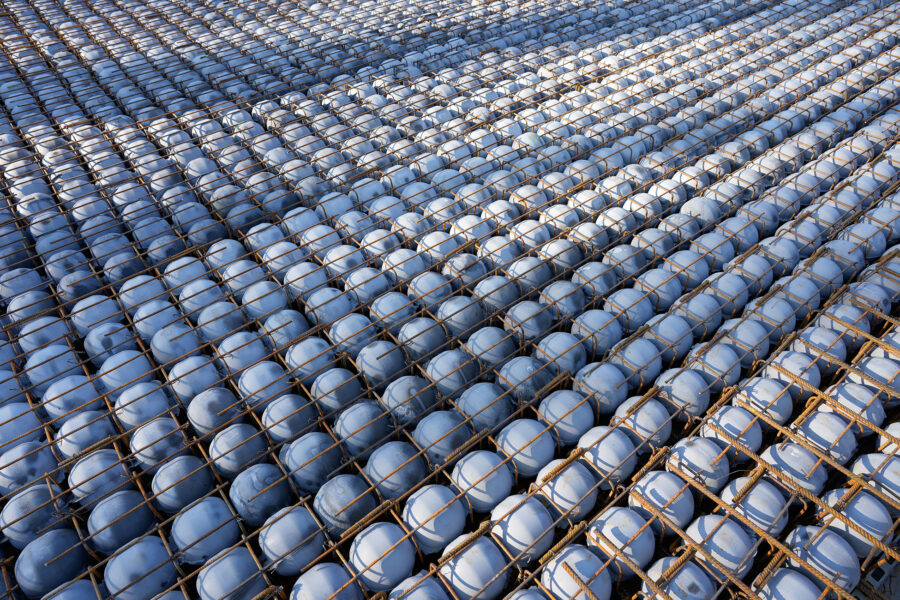
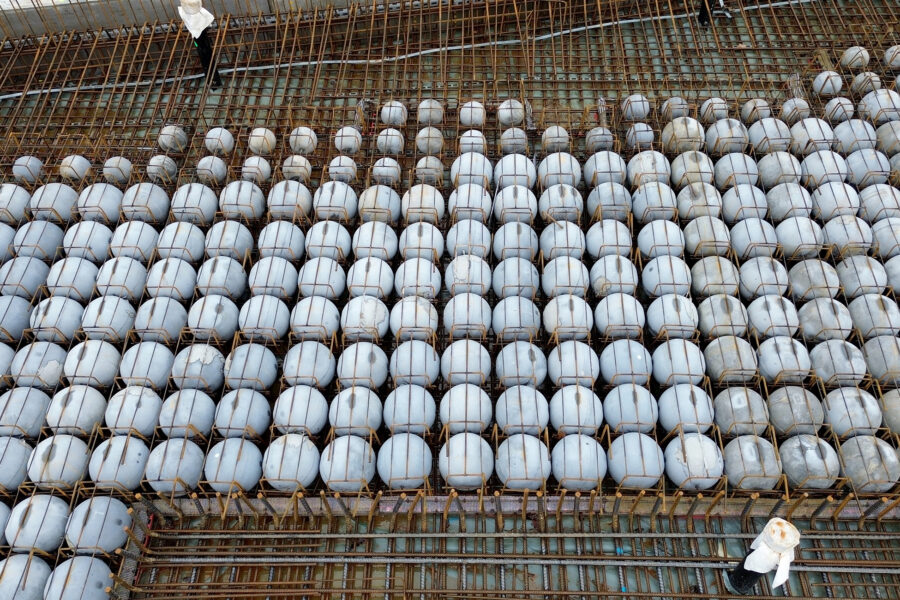
How can concrete construction become more resource-efficient? ILEK and its industry partner Eigner Bau manufactured nearly 20,000 mineral hollow spheres for use in functionally graded concrete.
Minimising the consumption of natural resources, greenhouse gas emissions and construction waste is essential to making the construction industry more sustainable. A comprehensive approach to addressing these challenges in concrete construction is the functionally graded concrete (FGC) technology developed at the Institute for Lightweight Structures and Conceptual Design (ILEK). It is based on the targeted arrangement of voids within concrete components in areas subject to low stress. This allows their weight to be significantly reduced, whilst the external boundary conditions of the component and its manufacture remain the same as for conventional concrete components. FGC offers considerable potential to tackle the sustainability challenge, particularly for foundation slabs and flat slabs in building construction.
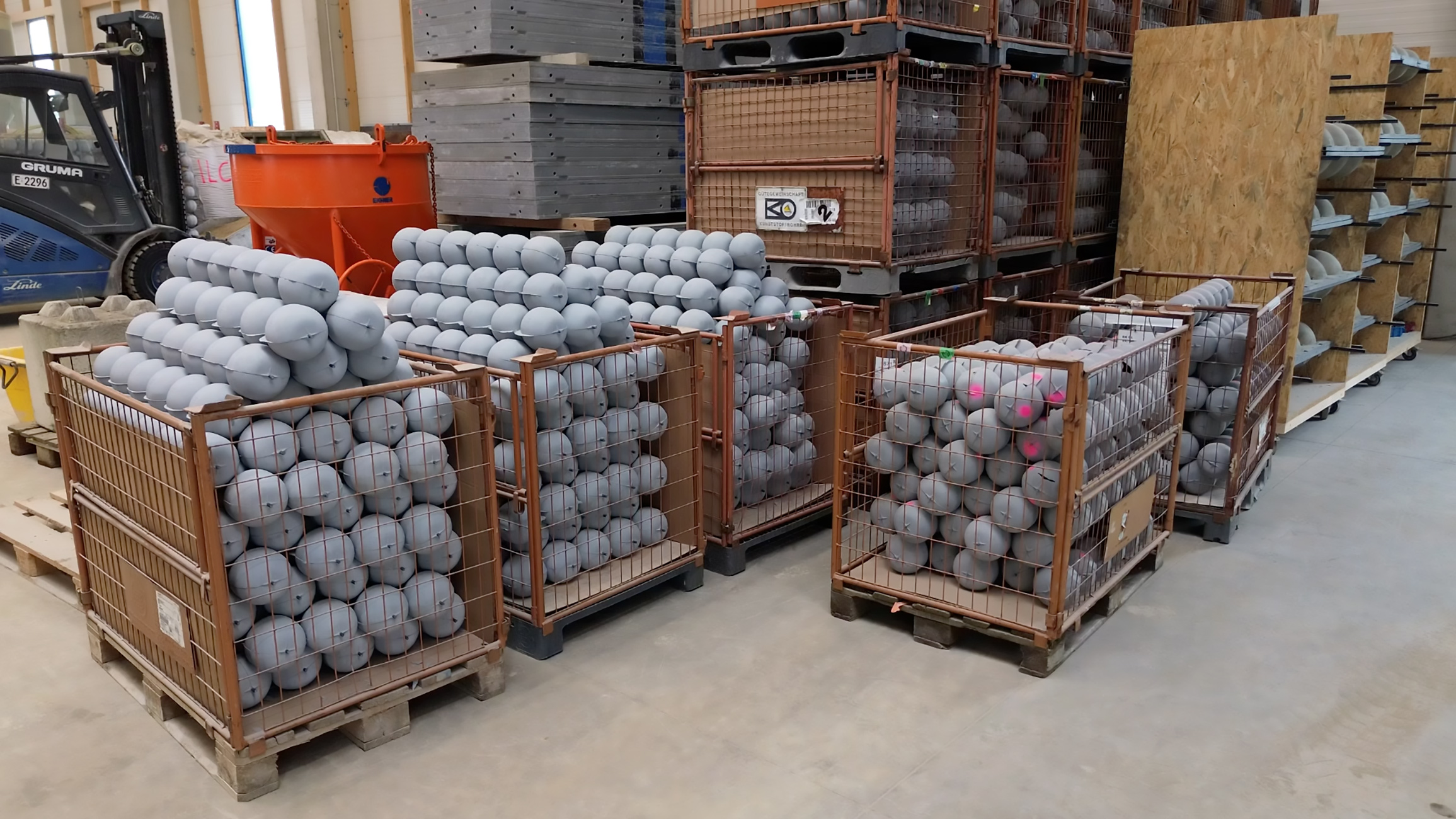
Following extensive research and the production of numerous small-scale prototypes our industrial partner, Eigner Bau in Nördlingen, has now manufactured just under 20,000 of these hollow spheres.
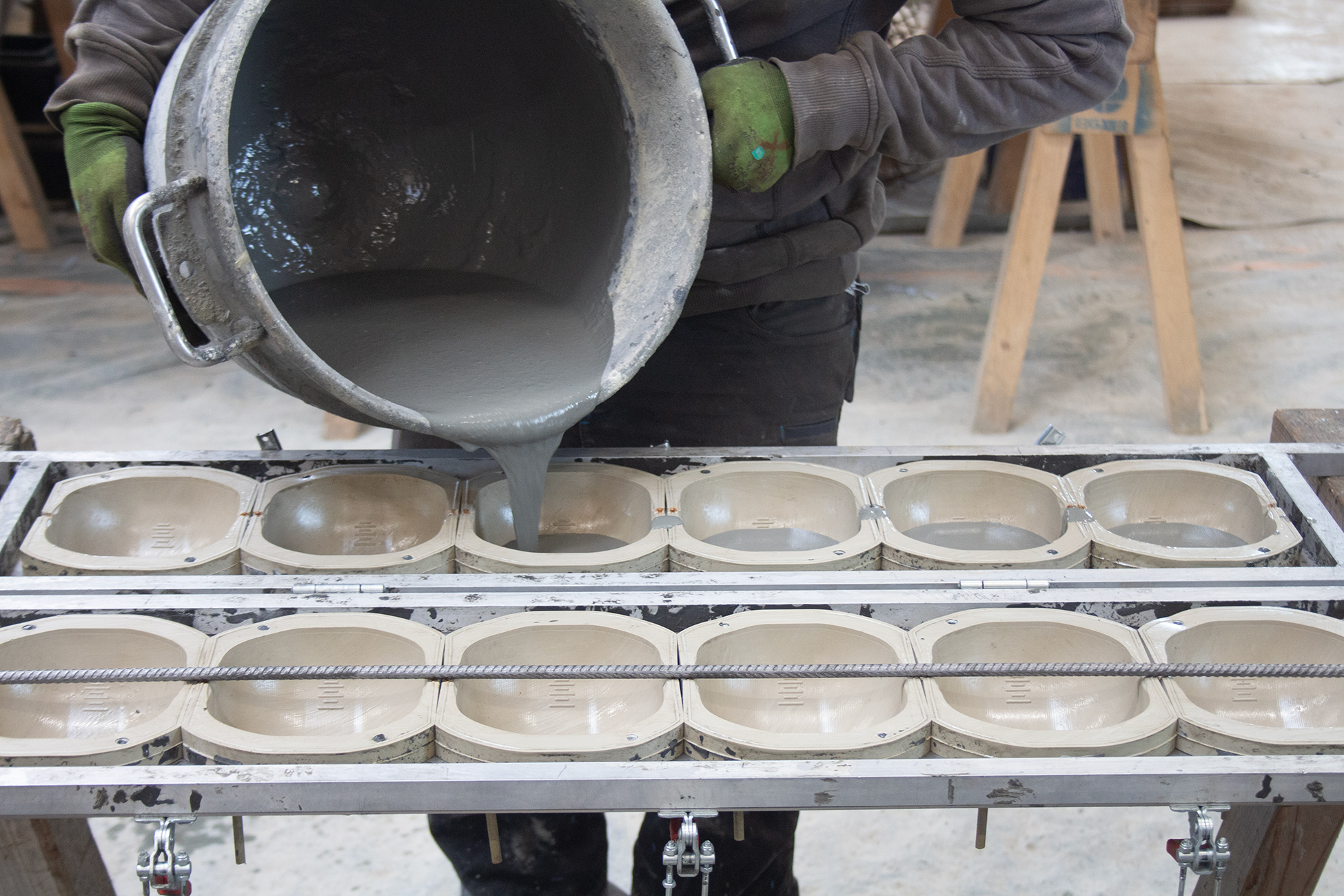
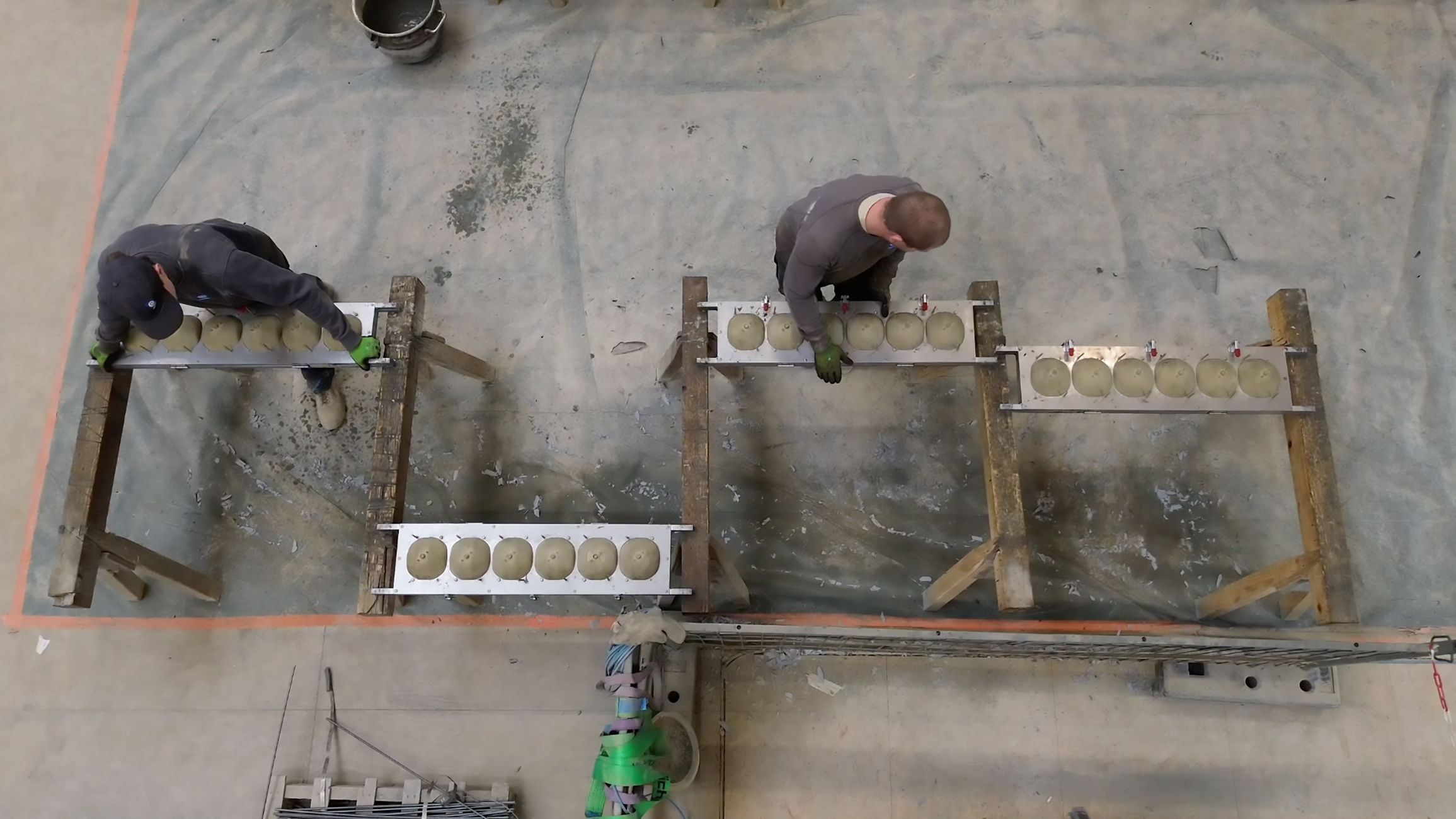
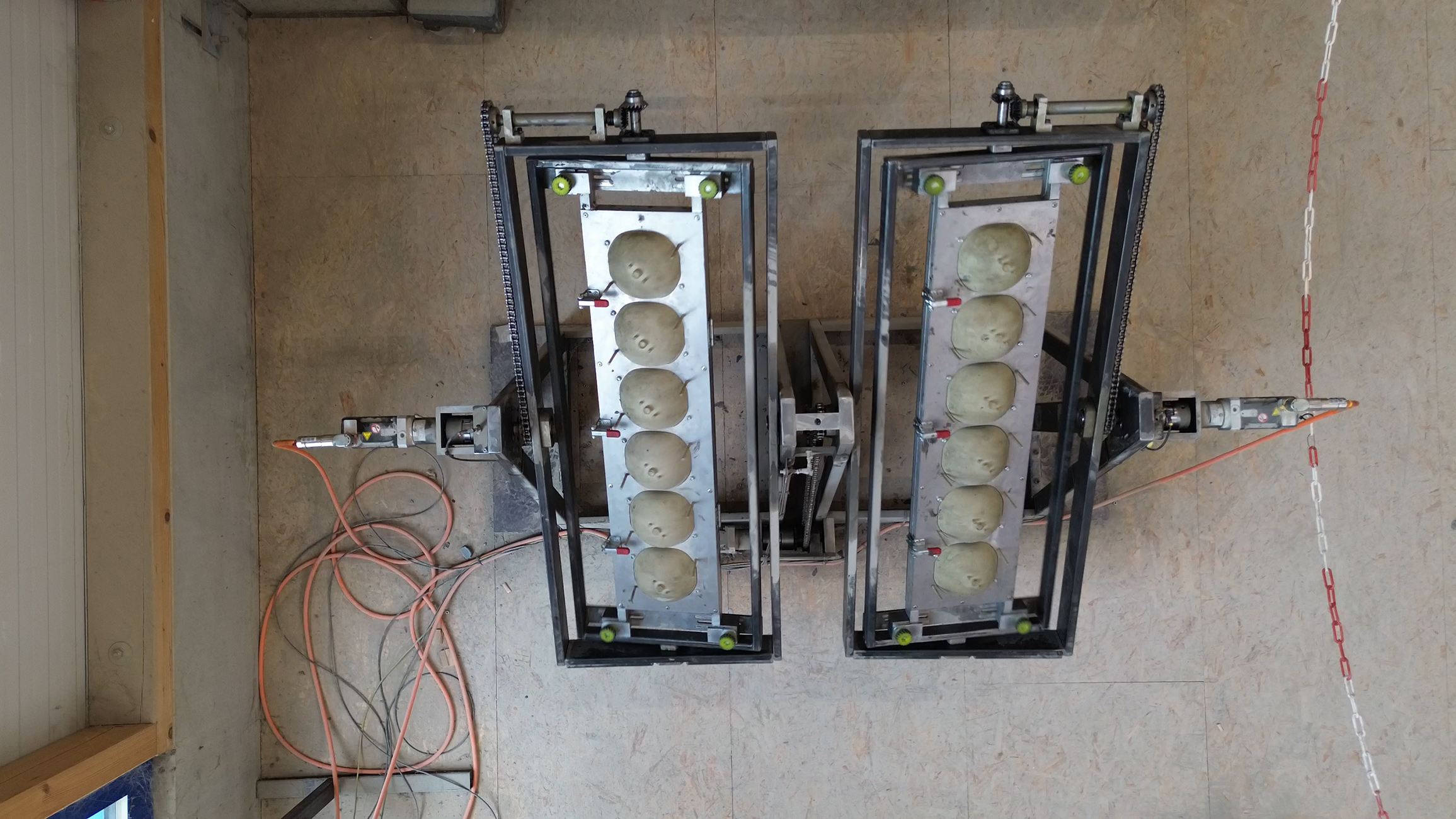
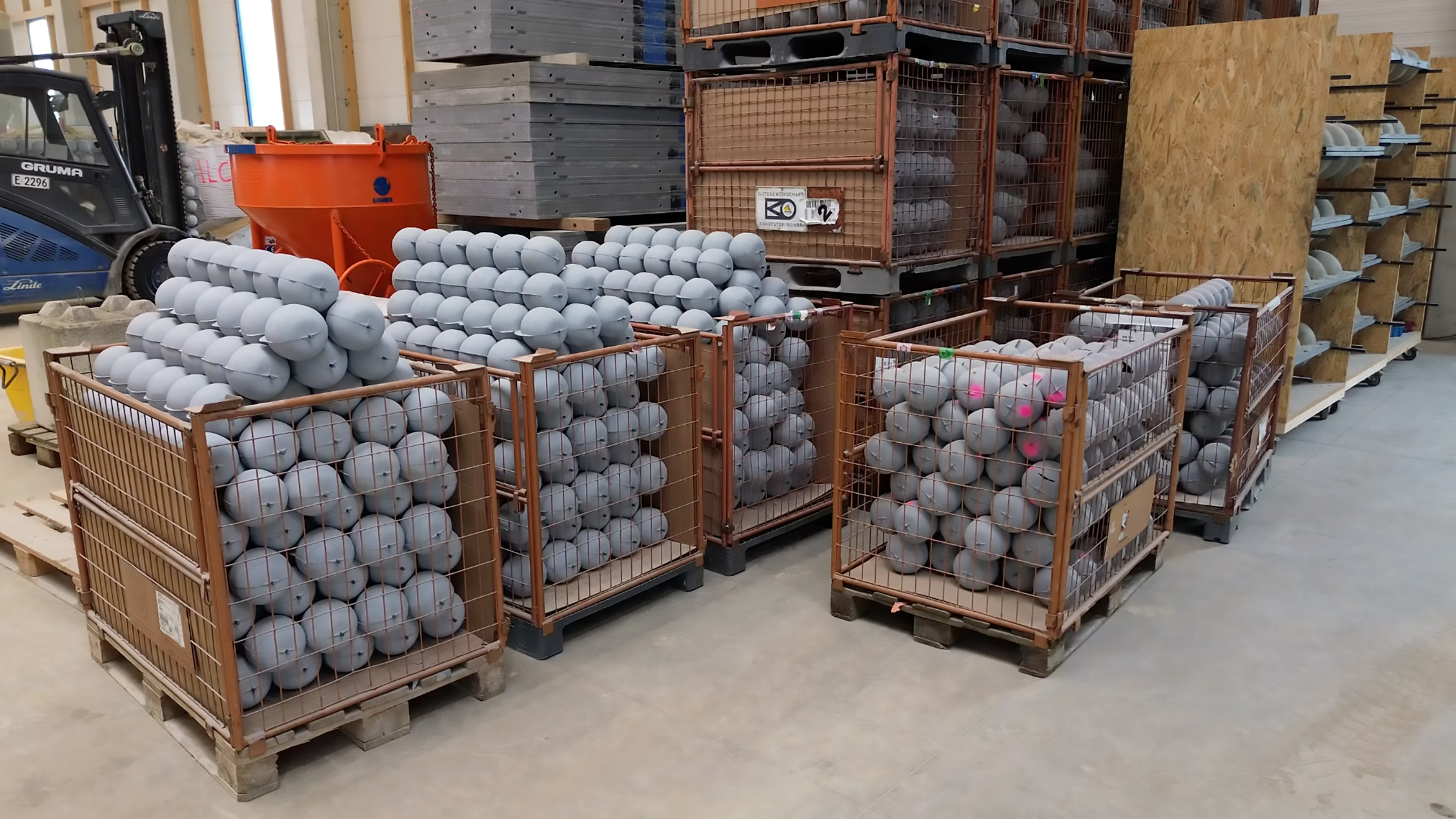
Step 1 – Filling the moulds
The concrete slurry prepared earlier is poured into specially designed moulds. The amount used depends on the desired wall thickness of the hollow spheres. Fill-level markings integrated into the flexible moulds ensure that each mould is filled with the same amount of material.
Step 2 – Preparing the moulds for the rotational moulding process
Once filled and sealed, the moulds are placed in the moulding frames and secured in the biaxial centrifuge.
Step 3 – Rotational moulding process in the centrifuge
The assembled moulds are set in rotation within the biaxial centrifuge. The movement causes the concrete slurry to distribute evenly along the inside of the mould and begin to set slowly. This produces several hollow spheres, which are connected via an integrated reinforcing bar to form a linear strand of hollow spheres.
Step 4 – Demoulding and assembling in assembly baskets
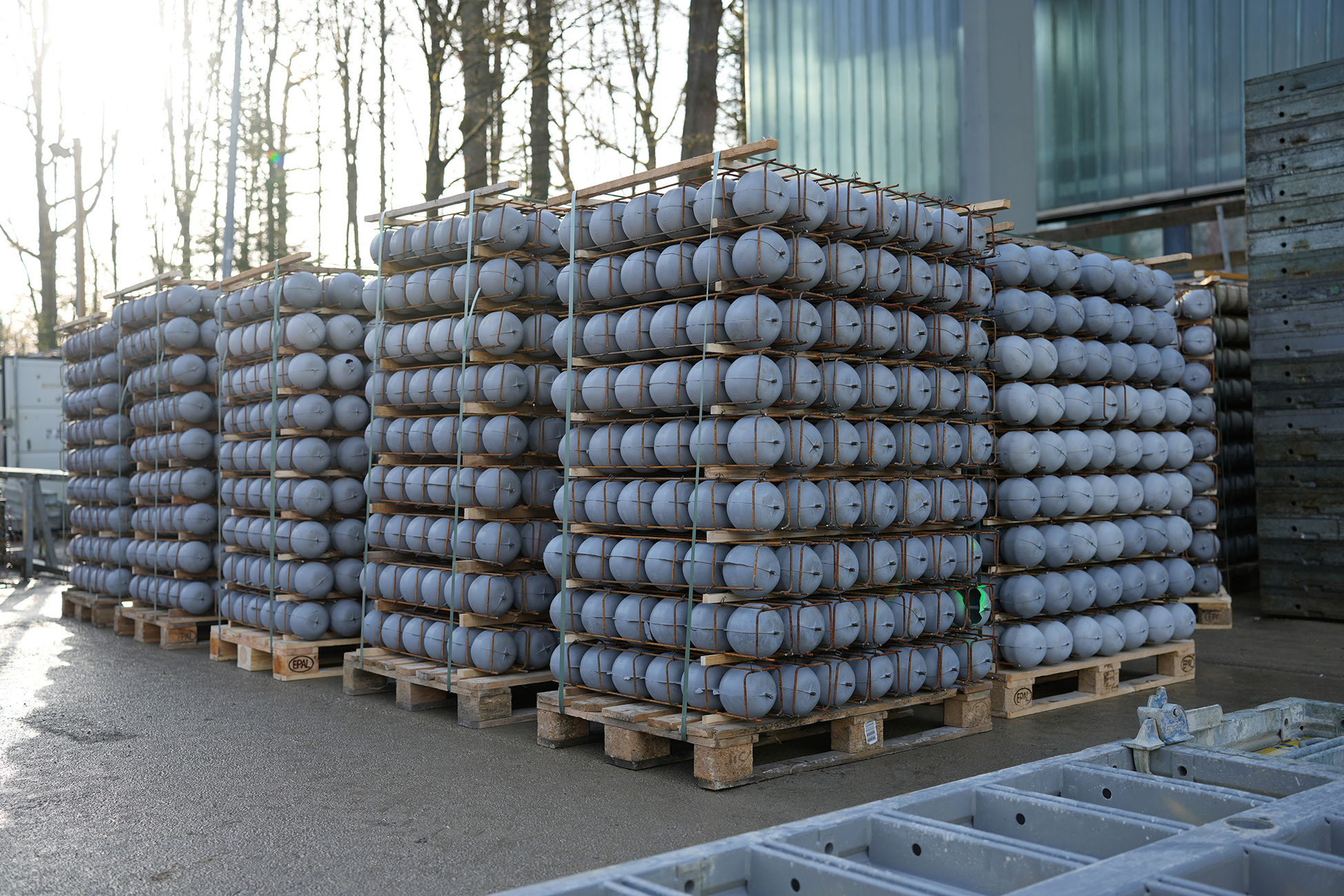
Once set, the mineral hollow sphere strands are removed from the moulds and assembled into laying modules in rebar baskets. This creates transportable units for subsequent installation into the concrete structures on site.
Step 5 – Transport to the construction site and installation
The installation of the precast units into the foundation slab and the first floor slab made of FGC happens on site in a usual manner.